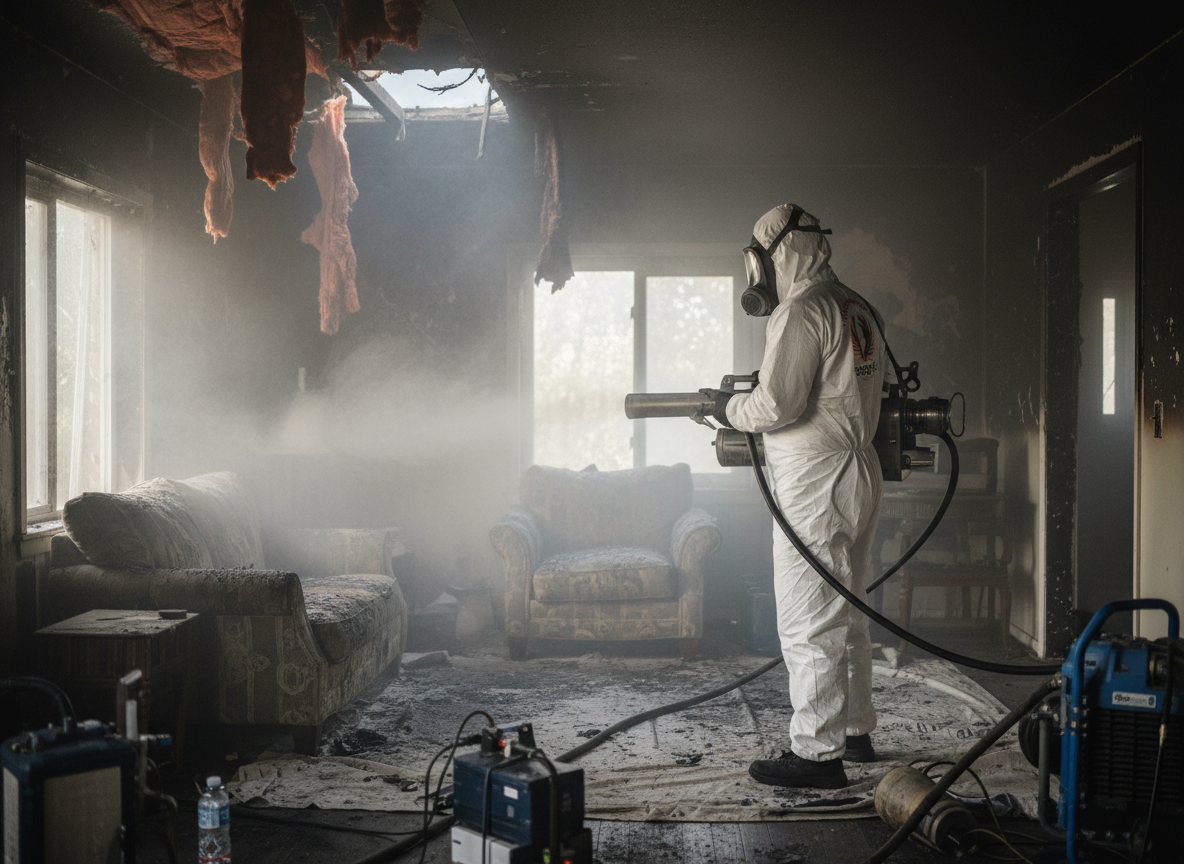
Saugus homes built before 1960 often feature plaster walls, oak flooring and unlined chimneys that trap smoke particulates deep in the substrate. Cold winter air from the humid continental climate pulls those residues into basements and crawl spaces, especially in Cliftondale and Lynnhurst where many properties sit on glacial till that holds moisture. Standard air fresheners fail here because the odor molecules have bonded to cellulose and gypsum; only thermal fogging or hydroxyl generators reach the embedded layers without damaging historic trim near the Saugus Iron Works district.
East Saugus and Oaklandvale ranches from the 1950s frequently share HVAC ducts with attached garages, allowing smoke to travel through the entire system during a kitchen fire. We isolate and clean each branch run, then treat the plenum with an encapsulant rated for porous materials. Warm summer humidity accelerates re-soiling if residues remain, so we verify clearance with both visual inspection and odor panels before returning the home. Properties near Breakheart Reservation see additional challenges from wind-driven smoke entering through attic vents during brush fires.
North Saugus capes and split-levels near Stackpole Field sit on sloped lots that direct water toward foundations; post-fire power washing of siding can push soot into those lower courses if not contained first. We use negative-air machines with HEPA filtration and seal off the work zone from the rest of the house to prevent cross-contamination into Melrose or Peabody adjacent streets. Every job includes documentation of affected materials so homeowners can show insurers exactly which porous surfaces required treatment.
Peabody and Malden border properties often call after shared-wall fires in duplexes; smoke migrates through electrical boxes and plumbing chases into finished attics. Our protocol includes removing and replacing insulation only where saturation exceeds 15 percent by weight, then applying an odor counteractant matched to the fuel source. This prevents the sweet, acrid smell from returning when temperatures drop again in late fall.
Technician insight
In Saugus, the thing that catches most people out with odor removal after fire is how quickly cold winter air pulls smoke into the stone foundations and dirt crawl spaces common in Golden Hills and North Saugus capes; if you only treat the living areas the smell returns the first time the furnace kicks on.
Cliftondale Cape After Electrical Fire
Smoke had traveled through knob-and-tube wiring chases into the finished attic of a 1940s Cliftondale home. We isolated the HVAC, removed saturated insulation, and treated the plaster ceilings with an encapsulant. After two rounds of hydroxyl processing the odor cleared before the first cold snap.
How it works
- 1
Initial Assessment
Walk every room, attic and basement to map smoke migration paths through the specific construction details found in Saugus homes.
- 2
Source Removal and Containment
Remove charred materials, set up negative air and seal HVAC returns to stop odor redistribution during cleaning.
- 3
Deep Cleaning and Treatment
Apply thermal fog or hydroxyl processing to penetrate porous surfaces, followed by surface sealing where needed.
- 4
Clearance Testing
Conduct sensory and instrument checks after treatment, then document results for insurance and homeowner records.
Pricing
Cost depends on square footage treated, number of affected levels, and whether HVAC or insulation requires removal.