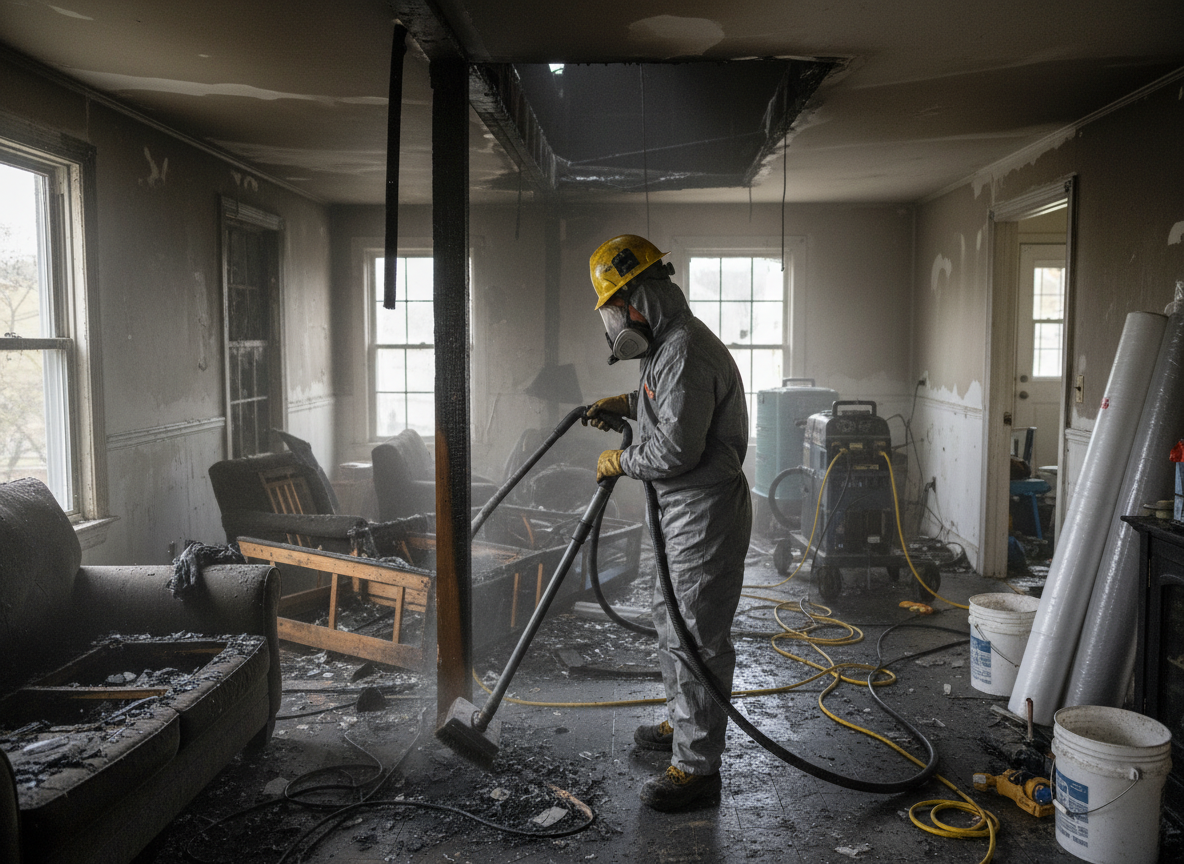
Saugus homes in neighborhoods like Cliftondale and Oaklandvale often feature plaster-and-lath walls and older HVAC systems that trap soot particles deep into cavities after a fire. Cold winters pull smoke further into these materials while warm humid summers can trigger secondary mold once water is introduced during suppression. Crews must map every duct run and test hidden voids before starting removal to avoid leaving residues that later off-gas into living spaces.
Breakheart Reservation and Golden Hills properties sit on varied terrain that affects equipment access and water runoff during cleanup. Residue from burned synthetic furnishings bonds differently to brick versus wood framing common near the Saugus Iron Works area. Technicians use negative-air machines sized for the structure and switch to dry-ice blasting on delicate surfaces rather than aggressive sanding that could damage historic details.
East Saugus and Lynnhurst homes built near Stackpole Field frequently have finished basements where smoke settles into carpet padding and subfloors. After initial debris removal, HEPA vacuuming followed by pH-neutral cleaning solutions prevents etching on glass and metal fixtures. Final air scrubbing runs until readings drop below detectable levels, with documentation provided for insurance adjusters working out of nearby Lynn and Malden.
North Saugus properties with oil or gas heating systems require extra steps to neutralize acidic smoke that corrodes copper wiring and plumbing. Seasonal temperature swings between winter freezes and summer humidity mean crews stage equipment to prevent condensation inside cleaned cavities. Every job ends with a walkthrough confirming no visible residue remains on surfaces or in HVAC returns.
Technician insight
In Saugus, the thing that catches most people out with fire damage clean up is how winter air pulls acidic smoke deep into plaster-and-lath walls common in Cliftondale and North Saugus homes, requiring extra time to open cavities before any cleaning starts.
East Saugus kitchen fire residue
A kitchen fire in an East Saugus home sent smoke through shared HVAC ducts into finished basement rooms. Inspection revealed soot lodged in carpet padding and behind baseboards. Crews removed affected flooring, HEPA-vacuumed cavities, and ran targeted odor treatment. Air readings cleared after two days and the family returned without lingering smells.
How it works
- 1
Site Assessment
Inspect all affected rooms, test air quality, and document soot depth in walls and ducts specific to Saugus housing stock.
- 2
Containment Setup
Seal off unaffected areas with plastic sheeting and negative air machines to prevent cross-contamination during debris removal.
- 3
Soot and Residue Removal
HEPA vacuum surfaces, use dry sponging on walls, and clean HVAC components before addressing odors.
- 4
Odor Neutralization
Apply thermal fogging or ozone treatment calibrated for the home's square footage and material types.
- 5
Final Clearance
Retest air quality and provide written report for Essex County insurance claims.
Pricing
Upfront quotes based on affected square footage, material types, and HVAC complexity; factors include winter access delays and hidden cavity depth.