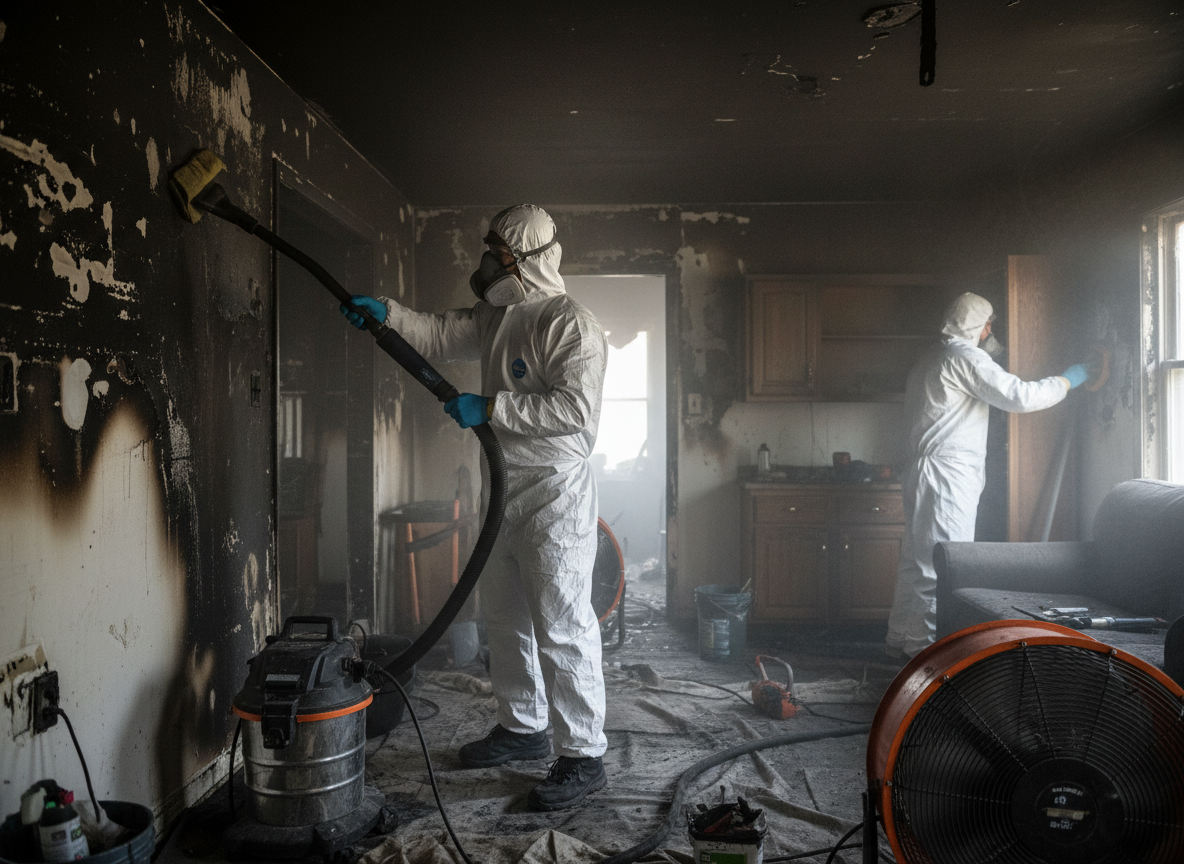
Smoke from structure fires in Saugus often travels through older plaster-and-lath walls common in Cliftondale and Oaklandvale homes, leaving acidic residues that etch metal fixtures and discolor oak flooring. In humid continental conditions with cold winters, these residues bond to cold surfaces and require alkaline neutralization before thermal fogging or ozone treatment can neutralize odors. Technicians at EmberAnchor map airflow paths from the fire origin through attics and balloon framing typical of Lynnhurst and Golden Hills properties, then isolate HVAC returns to prevent cross-contamination into unaffected rooms.
Porous materials such as insulation in North Saugus capes and brick townhomes near Saugus Iron Works National Historic Site frequently retain smoke particulates that re-emit odors when summer humidity rises. Standard HEPA vacuuming alone fails on these substrates; instead, we remove or encapsulate affected insulation and apply penetrant sealers rated for thermal damage. Nearby cities like Lynn and Malden share similar stock, so crews carry staged equipment at 855 Broadway for rapid deployment when calls come from Peabody or Melrose.
Edge cases include smoke migration into Breakheart Reservation-adjacent homes where steep terrain creates negative pressure zones that pull particulates into basements. We document these paths with moisture meters and borescopes before sealing, then ventilate using negative air machines exhausted away from Stackpole Field and Saugus Town Hall traffic patterns to avoid re-entrainment.
Code considerations in Essex County require verification that restored surfaces meet local fire-damage repair standards before re-occupancy; we coordinate with inspectors on every job rather than assuming clearance after cleaning.
Technician insight
In Saugus the thing that catches most people out with smoke remediation is how balloon framing in pre-1950 homes lets smoke travel from the basement straight to the attic without stopping at floor levels; once winter temperatures drop and humidity condenses inside those cavities, the odor returns weeks later unless you open the walls and treat the cavities directly.
Cliftondale Cape Smoke Migration
Smoke from a kitchen fire traveled upward through balloon framing into second-floor bedrooms. We found acidic residue on plaster and insulation that standard cleaning missed. Walls were opened, insulation removed, cavities treated, and surfaces sealed before reinstalling finishes.
How it works
- 1
Initial Assessment
Technicians inspect all affected rooms, test surfaces for pH and odor retention, and document smoke migration routes through the home's framing and HVAC.
- 2
Containment and Source Removal
We establish negative-pressure zones, remove heavily contaminated porous materials, and clean non-porous surfaces with appropriate alkaline agents.
- 3
Odor Neutralization
Thermal fogging or hydroxyl treatment follows, with repeat cycles as needed until no residual smoke odor remains detectable.
- 4
Final Clearance and Sealing
Post-treatment testing confirms surfaces are neutral; sealers are applied where required before returning the property to the owner.
Pricing
Upfront quotes follow on-site inspection; scope depends on smoke penetration depth and materials affected.