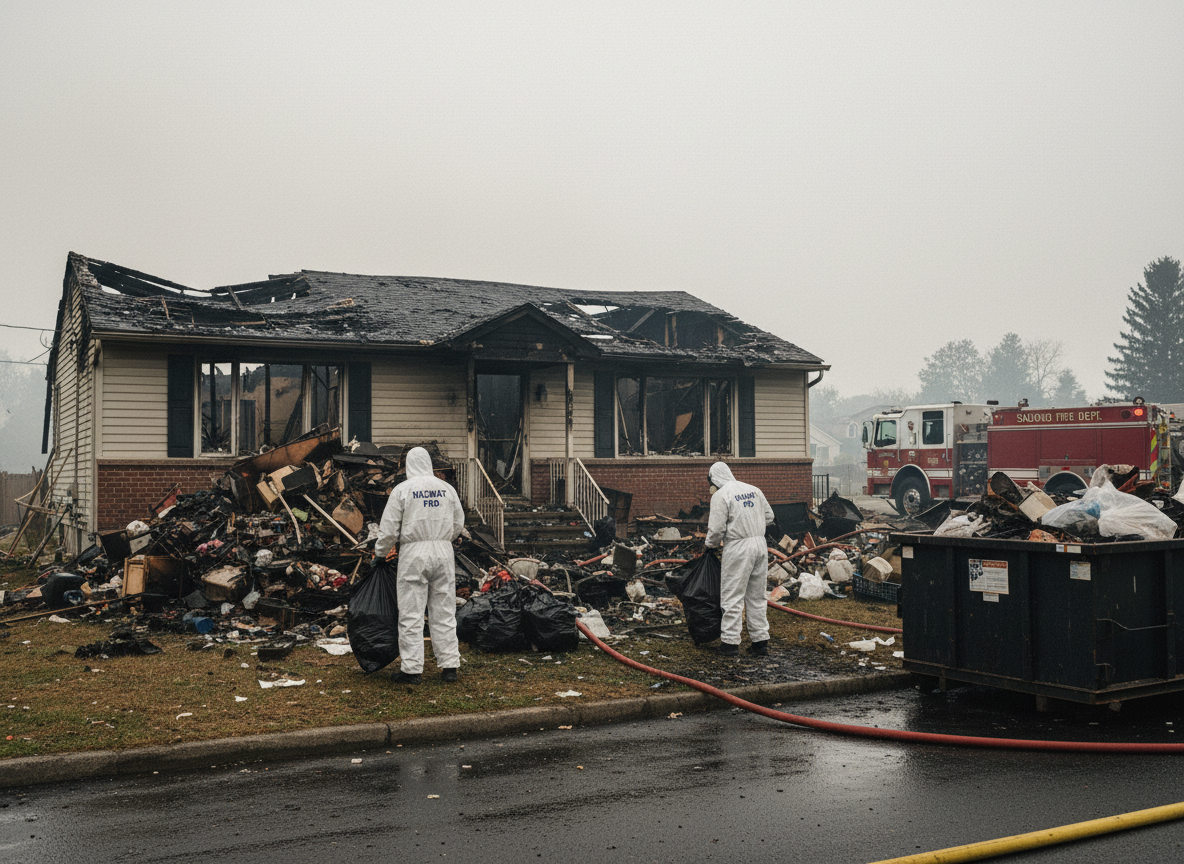
Hoarding cleanup after fire in Saugus often involves older homes built before modern fire codes, common in neighborhoods like North Saugus and Oaklandvale. Smoke and soot penetrate stacked belongings and settle into wall voids, requiring careful disassembly rather than simple removal. Cold winters increase indoor heating use, which can worsen smoke migration through unsealed chimneys and attics before crews arrive. Technicians must separate salvageable items from contaminated debris while protecting remaining structures from cross-contamination during transport through tight hallways typical of Lynnhurst properties.
In East Saugus and Golden Hills, humid summers following a winter fire can promote mold growth on water-damaged hoard piles once power is restored. Crews use negative air machines and HEPA filtration to capture particulates that standard vacuums miss, especially in multi-story homes near Breakheart Reservation where terrain limits equipment access. Edge cases include hidden grease fires in kitchens that spread upward through accumulated paper and fabrics, leaving residue that requires multiple neutralization passes. Local regulations in Essex County require proper disposal manifests for burned materials, which crews coordinate to avoid delays at transfer stations serving Saugus, Lynn, and Malden.
Work in Oaklandvale and Cliftondale frequently encounters mixed materials like plastics and textiles that off-gas after fire exposure, creating odors that linger in closed spaces. Restoration teams document each layer removed to support insurance claims common in these established neighborhoods. Terrain around Stackpole Field and Saugus Town Hall areas can complicate staging of dumpsters during winter months when snow narrows driveways. Proper sequencing prevents re-soiling of cleaned surfaces, a step often overlooked when homeowners attempt initial sorting themselves.
Technician insight
In Saugus, the thing that catches most people out with hoarding cleanup after fire is the way older homes in North Saugus and around the Saugus Iron Works trap soot behind layers of stored items, especially when cold winters keep windows sealed and force smoke deeper into wall cavities before crews reach the site.
Lynnhurst Basement After Kitchen Fire
A kitchen fire in a Lynnhurst home sent smoke into a basement filled with stacked boxes and furniture. Crews found soot coating everything plus hidden water damage from suppression efforts. They contained the area, removed layers of debris over two days, and treated surfaces to eliminate odors. The homeowner regained usable space without further structural issues.
How it works
- 1
Initial Assessment
Technicians evaluate the property in Saugus neighborhoods, identifying hoarded zones, smoke migration paths, and structural concerns from the fire.
- 2
Containment Setup
Plastic barriers and air scrubbers isolate work areas to prevent soot spread into unaffected rooms common in older Essex County homes.
- 3
Debris Removal
Layer-by-layer extraction of contaminated items occurs with sorting for salvage where possible, followed by transport to approved disposal sites.
- 4
Deep Cleaning and Odor Treatment
HEPA vacuuming, surface washing, and thermal fogging address embedded residues before final inspection and clearance.
Pricing
Costs depend on volume of hoarded material, fire extent, and access challenges in Saugus homes; upfront quotes provided after assessment.