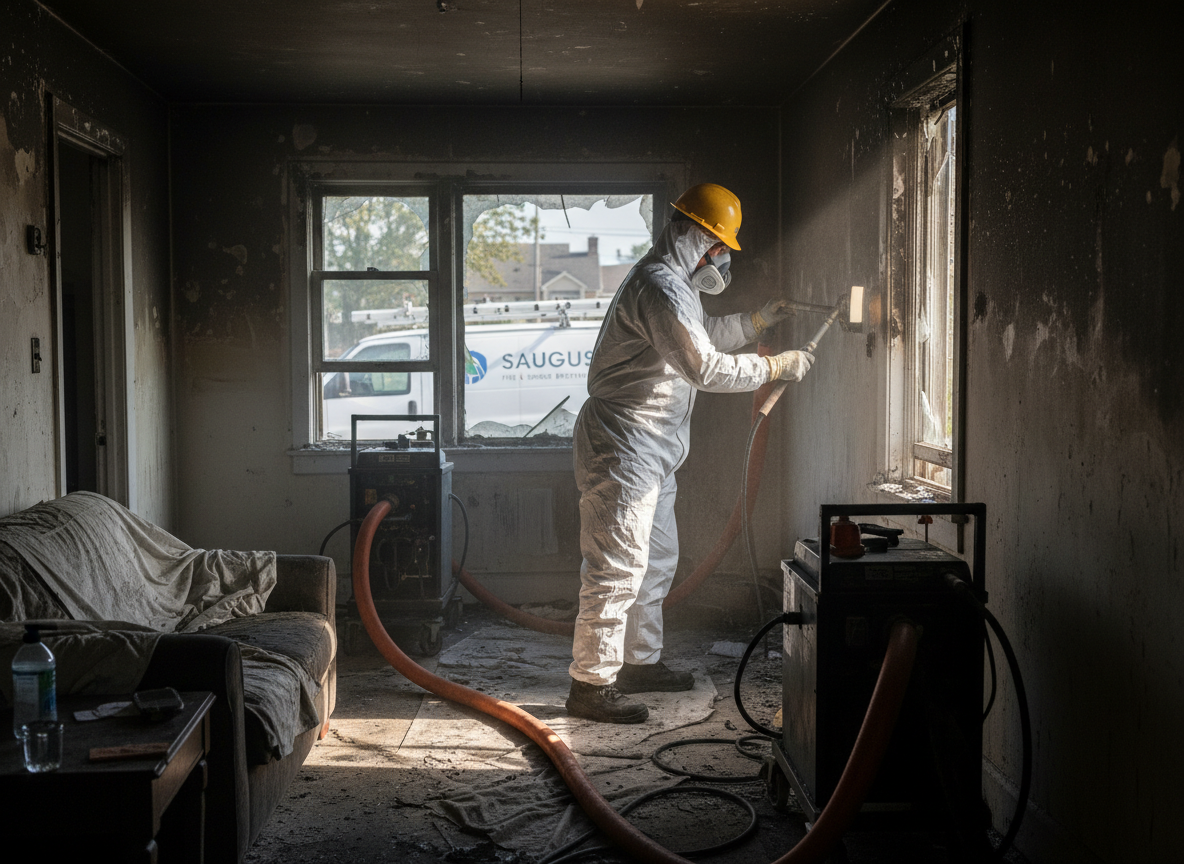
Saugus homes built before 1960 often feature plaster walls, knob-and-tube wiring and balloon framing that allow smoke to travel vertically through wall cavities into attics. Cold winter temperatures in Essex County drive rapid smoke odor absorption into insulation and hardwood floors, requiring removal of affected materials rather than surface cleaning alone. Crews must also account for Breakheart Reservation terrain when accessing properties in Oaklandvale or Golden Hills after winter storms leave access roads narrow and icy.
After a kitchen fire in a Lynnhurst ranch, smoke migrates through HVAC ducts into bedrooms, leaving acidic residues that etch metal fixtures and discolor vinyl flooring. Restoration includes negative-air machines to capture particulates before they settle on neighboring homes in East Saugus, plus documentation for insurance adjusters familiar with Saugus Town Hall permitting rules. Warm summer humidity can reactivate hidden odors weeks later if moisture is not extracted from subfloors.
Properties near the Saugus Iron Works National Historic Site sit on older sewer lines that complicate water extraction when suppression systems are used. Technicians test for lead and asbestos in pre-1978 homes before cutting drywall, then dispose of debris according to local Essex County landfill rules. Stackpole Field parking lots sometimes serve as staging areas for larger equipment when driveways in Golden Hills are too steep for heavy trucks.
Technician insight
In Saugus, the thing that catches most people out with fire and smoke damage restoration is how quickly smoke penetrates the plaster and lath in pre-war homes along the Saugus River corridor. Once winter temperatures drop, that smoke odor locks into cold floor joists and stays until you open the cavities. Homeowners often try ozone machines themselves and only push the smell deeper into the insulation.
Kitchen Fire in East Saugus Cape
Smoke from a stove fire traveled through open floor registers into second-floor bedrooms of a 1948 Cape in East Saugus. We found heavy soot on drywall behind the kitchen and acidic residue inside the forced-air ducts. After removing affected plaster and running negative air for four days, the home passed clearance testing and the family moved back in before the next cold snap.
How it works
- 1
Initial Assessment
Technicians arrive within hours, document all affected rooms in the Saugus property, and test for hidden smoke migration through walls and HVAC.
- 2
Containment and Safety
Plastic barriers and negative air are set up to protect unaffected areas while checking for structural compromise common in older Essex County homes.
- 3
Removal of Contaminated Materials
Burned and smoke-soaked insulation, drywall and flooring are removed; contents are inventoried for cleaning or disposal.
- 4
Odor Neutralization and Drying
Thermal fogging and hydroxyl generators address embedded smoke odors while dehumidifiers pull moisture from winter-dampened structures.
- 5
Rebuild and Final Clearance
Repairs match original finishes, followed by air quality testing before homeowners return to properties in Cliftondale or North Saugus.
Pricing
Pricing varies with fire size, smoke travel through older Saugus construction, and whether winter conditions slow access or drying.