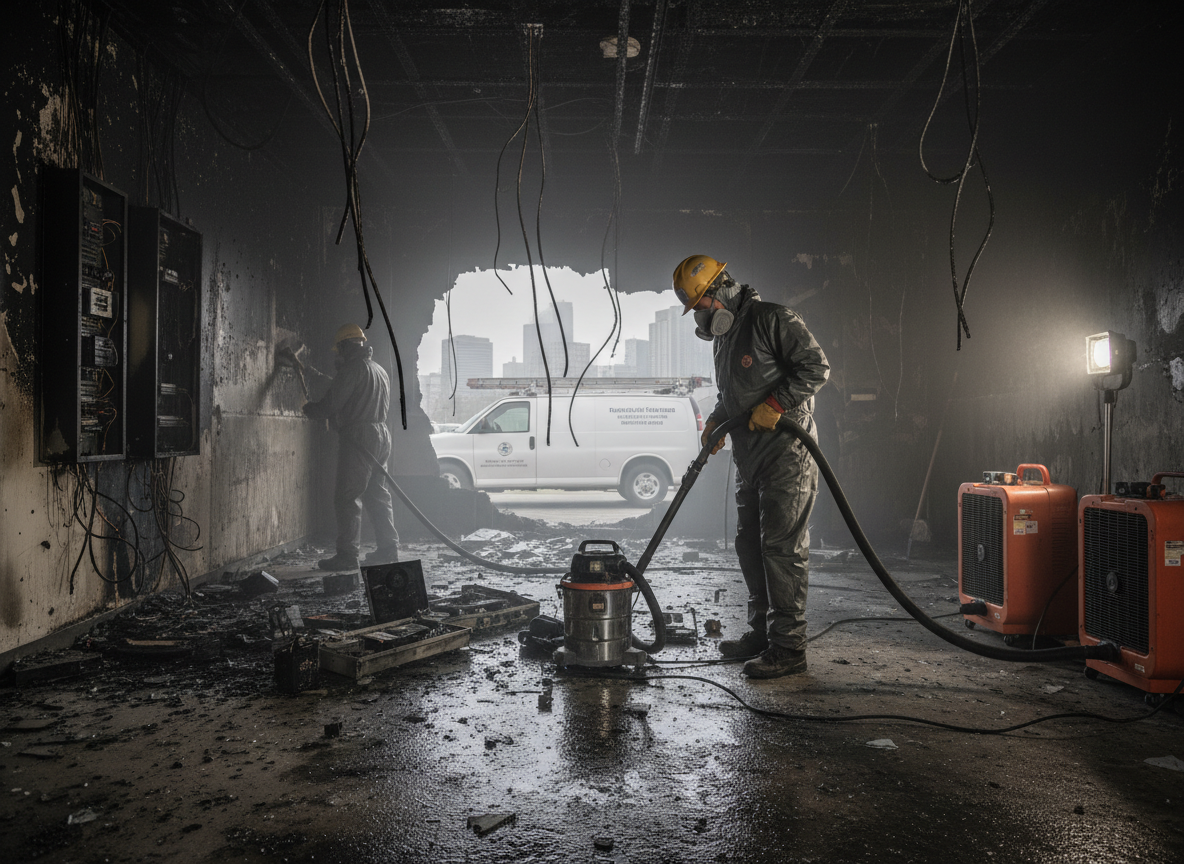
Electrical fires in Saugus often start in older homes built before 1960 in neighborhoods like Cliftondale and Lynnhurst where knob-and-tube or early aluminum wiring remains common. Cold winters drive heavy use of baseboard heaters and overloaded circuits, pushing soot through HVAC ducts into every room. Cleanup requires isolating affected circuits, removing charred insulation without disturbing live wires, and capturing fine carbon particles that settle into plaster walls and hardwood floors common in Golden Hills and Oaklandvale.
After power is secured, technicians use HEPA vacuums and alkaline sponges to lift acidic soot before it etches metal fixtures or discolors oak trim. In North Saugus and Oaklandvale properties near Breakheart Reservation, moisture from humid summers can combine with soot to create corrosive residues inside wall cavities. Edge cases include hidden damage behind stacked stone foundations or in attic insulation where mice have chewed wiring; these require targeted demolition rather than surface cleaning to meet Massachusetts electrical code when circuits are replaced.
Homeowners frequently discover that standard insurance adjusters overlook pH testing of residues, which determines whether drywall must be replaced or can be sealed. Work near Saugus Iron Works or Stackpole Field often involves coordinating with local inspectors because older neighborhoods sit on shallow lots with limited access for equipment. Proper documentation of pre-existing wiring conditions protects owners when utilities require upgrades before re-energizing panels.
Technician insight
In Saugus the thing that catches most people out with Electrical fire cleanup is how quickly soot travels through balloon-framed walls in pre-1950 homes around Cliftondale and East Saugus. Cold winter nights push warm air upward and carries fine particles into every floor; if you only clean visible surfaces the odor returns the first time the heat kicks on again.
East Saugus baseboard fire
A 1948 Cape in East Saugus lost power after an overloaded baseboard circuit arced. Soot had traveled through open floor joists into the upstairs bedrooms. We isolated the panel, mapped residue with particle counters, cleaned the ductwork and wall cavities, then verified clearance with air sampling before the electrician reconnected service.
How it works
- 1
Safety Lockout
Shut down power at the panel and verify zero energy on all circuits feeding the affected area before any entry.
- 2
Soot Mapping
Use moisture meters and particle counters to trace migration paths through ducts, attics and wall cavities in the specific Saugus home.
- 3
Residue Removal
Apply pH-neutral cleaners and HEPA extraction to surfaces while containing dust to prevent cross-contamination to unaffected rooms.
- 4
Air Quality Verification
Run post-clean air sampling and visual inspection under UV light to confirm no lingering carbon film remains before re-energizing.
Pricing
Cost depends on square footage affected, number of HVAC zones, and whether wall cavities require opening; upfront written quotes provided after on-site assessment.