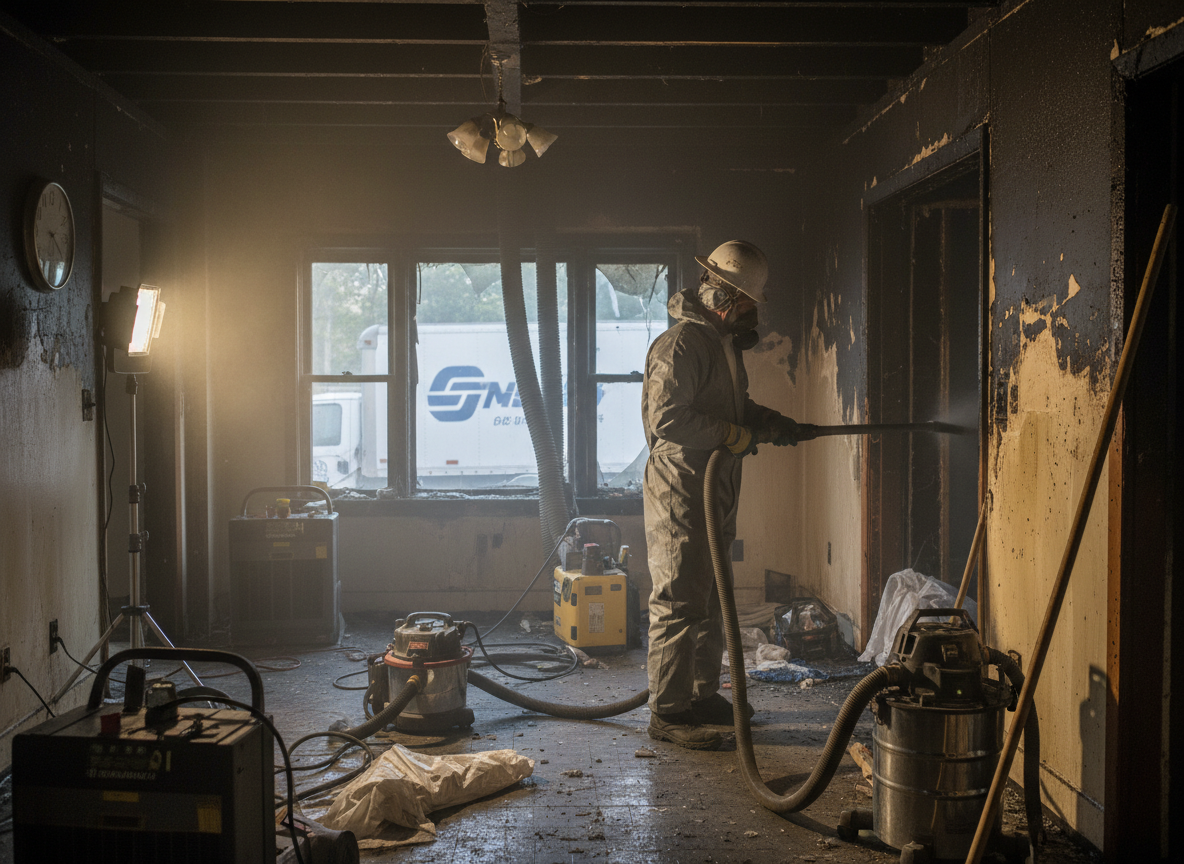
Saugus homes built before the 1970s often feature balloon framing and plaster-over-lath walls that let fire and smoke travel vertically between floors and into attics. In Essex County, winter heating loads from oil furnaces and wood stoves raise the chance of flue fires that deposit heavy creosote soot. A 24 hour fire restoration crew must begin negative-pressure containment and HEPA air scrubbing within hours, before cold outdoor air condenses on wet drywall and drives hidden mold. Delaying even one night can turn a contained kitchen fire into odor migration through shared walls in Lynnhurst duplexes.
Breakheart Reservation terrain and the steep grades near Golden Hills mean equipment must be carried in rather than rolled, slowing board-up and debris removal after a structure fire. Older brick and wood-frame houses around the Saugus Iron Works site also hold moisture longer once winter temperatures drop, so technicians test wall cavities with moisture meters before sealing. Nearby Lynn and Malden share similar stock, but Saugus permitting requires Essex County notification for any structural shoring that affects the public way.
After initial demolition, crews remove charred joists and treat remaining framing with antimicrobial encapsulants rated for smoke residue. In Oaklandvale ranches, HVAC systems often share ductwork with finished basements, requiring full trunk-line cleaning or replacement to stop re-sooting. Final clearance includes third-party air sampling for particulates before homeowners return.
Technician insight
In Saugus, the thing that catches most people out with 24 hour fire restoration is how quickly cold winter air pulls smoke residue into the plaster and lathe of pre-war homes around Stackpole Field. Homeowners often think wiping visible surfaces is enough, but once temperatures drop the soot bonds to the cold walls and you end up chasing odor through every stud bay in East Saugus capes.
Kitchen Flue Fire in Cliftondale Cape
A flue fire from an oil furnace spread soot through second-floor bedrooms of a 1950s Cape in Cliftondale. We found heavy creosote in the shared chase and moisture trapped behind the plaster after firefighters used water. We performed same-night board-up, removed affected drywall, and ran drying equipment for four days before reconstruction. The family returned within ten days without lingering odor.
How it works
- 1
Emergency Board-Up
Secure openings with plywood and tarps within the first hour to prevent weather intrusion and unauthorized entry.
- 2
Soot and Smoke Removal
Deploy air scrubbers and apply pH-neutral cleaners to all hard surfaces before odors set into porous materials.
- 3
Water Extraction and Drying
Remove standing water from suppression efforts and use dehumidifiers sized for Essex County winter humidity loads.
- 4
Structural Demolition and Reconstruction
Cut out irreparably damaged sections and rebuild to current code while coordinating with Saugus building department.
Pricing
Pricing varies by fire size, affected square footage, and whether HVAC or structural framing must be replaced; upfront written estimates provided before work begins.